The business landscape in 2026 does not tolerate digital inefficiencies. As off-the-shelf software increasingly relies on rigid, subscription-heavy models that lock your data into walled gardens, mid-market enterprises and growing startups are realizing a critical truth: you cannot achieve an asymmetrical market advantage using the exact same symmetrical tools as your competitors.
At Intellihub IT Solutions, we have spent years engineering high-performance, compliant, and scalable digital products. In this definitive guide, written from the front lines of enterprise software engineering, we will unpack the strategic, technical, and financial frameworks defining custom software development in 2026.
Whether your goal is to eliminate manual operational workflows, migrate a legacy codebase to an elastic multi-cloud environment, or build an intelligent IoT platform, this master blueprint outlines exactly how to navigate high-stakes software investments to secure predictable, long-term ROI.
1. The Strategic Imperative of Custom Software in 2026
For decades, organizations faced a standard binary choice: buy standard commercial off-the-shelf (COTS) software or build a custom system from scratch. Historically, purchasing COTS was viewed as the default risk-mitigation strategy. However, the software economics of 2026 have completely upended this logic.
The SaaS Subscription & Vendor Lock-In Crisis
Commercial software ecosystems have shifted into aggressive, recurring per-seat pricing structures, unpredictable feature deprecations, and restrictive API throttling limits. When your core operational data sits inside a proprietary SaaS platform, your business is inherently exposed to external margin pressures and sudden licensing shifts. Custom software gives you complete intellectual property (IP) ownership, transforming a recurring operational expense (OpEx) into a tangible corporate asset (CapEx).
The Homogenization vs. Differentiation Dilemma
If you and your direct competitors rely on identical SaaS platforms to manage supply chains, logistics, customer onboarding, or business intelligence, your operational capabilities are identical. Custom software allows you to codify your proprietary operational efficiencies, unique client interactions, and specialized data pipelines directly into a product that competitors cannot legally replicate.
Eliminating Technical Fragmentation
Modern enterprises routinely battle “app fatigue”—the fragmentation of data across dozens of micro-SaaS subscriptions that require fragile, third-party middleware to communicate. A unified custom platform engineered by Intellihub consolidates disjointed operational modules into a single, cohesive ecosystem, eliminating redundant subscription costs and single-point-of-failure integration bottlenecks.
2. Core Service Spheres: Mapping Engineering to Value
To successfully deploy custom software, it is vital to understand how specialized engineering disciplines interconnect to solve distinct business challenges.
Custom Applications & SaaS Architecture
Building modern applications requires a profound shift away from monolithic systems toward multi-tenant, cloud-native architectures. 2026 demands applications designed for horizontal scaling, strict tenant isolation, and API-first structures.
- Multi-Tenancy Engineering: When developing Software-as-a-Service (SaaS) platforms, engineering teams must implement robust data-isolation patterns (such as database-per-tenant or shared-database-with-row-level-security) to guarantee absolute data privacy while maintaining optimal infrastructure utilization.
- API-First Design: Modern platforms do not operate in a vacuum. Custom applications must expose structured, secure, and comprehensively documented RESTful or GraphQL APIs, enabling seamless programmatic interactions with external vendors, legacy systems, and internal downstream applications.
API & Integrations: Connecting the Ecosystem
The modern digital landscape runs on connected ecosystems. Custom API development bridges gaps between disparate legacy infrastructure and modern cloud environments.
- Middleware Engineering: Developing bespoke middleware ensures high-throughput, low-latency data translation between old-guard enterprise resource planning (ERP) systems and frontend client portals.
- Data Orchestration: Custom integration layers prevent data silos, guaranteeing that a transaction processed at the edge instantly synchronizes across accounting, customer management, and fulfillment pipelines without manual intervention.
DevOps, CI/CD, and Infrastructure as Code (IaC)
Software is no longer static; it is a continuously evolving product. High-performing engineering operations rely heavily on sophisticated DevOps practices to maintain high deployment velocities without compromising platform stability.
- Continuous Integration & Continuous Deployment (CI/CD): Automating code linting, security vulnerability scanning, unit testing, and production deployments eliminates human error and shortens time-to-market from months to minutes.
- Infrastructure as Code (IaC): Utilizing tools like Terraform or OpenTofu allows development teams to declare environment infrastructure (servers, load balancers, firewalls) purely through code. This ensures identical environment configurations across Development, Staging, and Production stages, entirely removing “it works on my machine” bottlenecks.
Quality Assurance (QA) & Comprehensive Testing
Unstable software kills user adoption and compromises enterprise security. A modern, robust QA paradigm balances automated precision with empathetic human validation.
[Code Commit] ──> [Automated Unit/Lint Tests] ──> [Security/SAST Scanning]
                      │
                      ▼
[Staging Deployment] ──> [Automated Integration/E2E] ──> [Manual UAT] ──> [Production]
- Automated Testing Pipelines: Implementing comprehensive end-to-end (E2E) automation frameworks ensures that new code contributions do not introduce regressions into established business logic.
- Security & Penetration Testing: Embedding static and dynamic application security testing (SAST/DAST) directly into the build pipeline ensures vulnerability detection happens early in the cycle, long before code reaches a public environment.
3. Cloud Services & Modern Infrastructure Paradigms
Infrastructure is the silent engine of software performance. In 2026, the discussion has moved entirely past simple virtual machine provisioning toward elastic, self-healing cloud architectures.
Cloud Migration Frameworks
Migrating legacy workloads away from on-premises servers requires an analytical approach. Engineering teams evaluate workloads based on the classic “R” frameworks:
- Rehosting (Lift and Shift): Moving applications directly to the cloud with minimal structural changes. This is often used for rapid data center evacuations.
- Replatforming: Modifying application components to leverage cloud-native services (like swapping a self-managed database for an automated, managed instance) without altering core application logic.
- Refactoring / Rearchitecting: Completely rewriting application modules to fit microservices or serverless patterns, maximizing long-term cloud cost-efficiencies and scaling capabilities.
Multi-Cloud & Hybrid Strategies
Relying entirely on a single public cloud provider introduces concentration risk and potential regional compliance challenges.
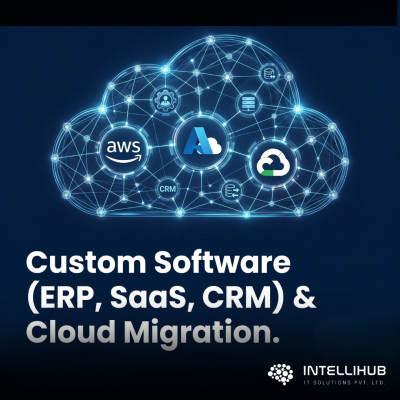
- Vendor Agnostic Architectures: Designing systems that operate seamlessly across Amazon Web Services (AWS), Microsoft Azure, or Google Cloud Platform (GCP) protects enterprises from provider-specific outages and allows them to leverage specialized services unique to each cloud vendor.
- Data Sovereignty Compliance: Hybrid models allow organizations to keep sensitive customer data within secure local private clouds while utilizing the immense computational power of public clouds for non-sensitive processing workloads.
Serverless Architectures
Serverless computing abstracts infrastructure management completely away from developers. Code executes purely in response to real-time events, scaling up instantaneously to handle traffic surges and dropping down to zero during idle periods.
- FinOps & Cost Efficiency: With serverless execution models (such as AWS Lambda or Azure Functions), businesses stop paying for idle server uptime, shifting cloud budgets away from raw infrastructure provisioning to precise, usage-based consumption patterns.
- Reduced Operational Overhead: Teams no longer spend critical engineering hours configuring operating systems, applying security patches, or managing scaling policies; the underlying cloud fabric handles it automatically.
Containerization with Kubernetes
For complex, distributed enterprise applications, container orchestration via Kubernetes provides the standard framework for scale and reliability.
- Microservices Management: Containerizing services within isolated Docker images ensures environment consistency across every step of the pipeline. Kubernetes orchestrates these containers, monitoring health, routing traffic, and handling resource allocation dynamically.
- Self-Healing Mechanisms: If an application container crashes or experiences memory exhaustion under heavy load, Kubernetes automatically kills the unhealthy instance and provisions a fresh, operational container within seconds, preserving system uptime.
Regulatory Compliance: GDPR, HIPAA, and Beyond
Global compliance frameworks mandate that security and privacy cannot be afterthoughts—they must be embedded directly into the software’s architecture from day one.
+------------------------------------------------------------------------+
|                      COMPLIANCE DESIGN PRINCIPLES                      |
+-----------------------------------+------------------------------------+
|             GDPR                  |               HIPAA                |
+-----------------------------------+------------------------------------+
| • Right to Be Forgotten Systems   | • Strict Business Associate Logs   |
| • Explicit Consent Microservices  | • End-to-End PHI Encryption        |
| • Data Anonymization Pipelines    | • Automated Audit Trail Logging    |
+-----------------------------------+------------------------------------+
- Data Encryption Standards: Custom applications handling regulated data must implement strict AES-256 encryption for data at rest and TLS 1.3 encryption for data in transit, combined with automated, cryptographically secure key rotation practices.
- Granular Access Control: Implementing Role-Based Access Control (RBAC) and Attribute-Based Access Control (ABAC) guarantees that data exposure is restricted exclusively to authorized personas, automatically producing immutable audit logs for compliance validation.
4. High-Impact Tech Stacks: Powering Modern Platforms
Selecting the right technologies defines your platform’s long-term maintenance costs, performance bounds, and talent acquisition options. A well-vetted technology stack balances proven ecosystem maturity with modern engineering efficiencies.
Ecosystem Deep-Dive
Node.js / TypeScript
- Layer: Backend Development / API Engineering
- Use Cases: High-throughput microservices, real-time data pipelines, unified full-stack applications.
- Strategic Advantage: TypeScript brings strict compile-time type-safety to JavaScript’s high performance, reducing runtime bugs. A shared language across frontend and backend unified teams dramatically accelerates engineering velocity.
Python (Django / Fast API)
- Layer: Backend Development / Data Engineering
- Use Cases: Machine learning integrations, intensive data analytics platforms, highly secure rapid-MVP development.
- Strategic Advantage: FastAPI delivers exceptional asynchronous performance rivaling Node.js, while Django offers a deeply mature ecosystem with built-in security features, making it ideal for robust enterprise backends.
React / Next.js
- Layer: Frontend User Interfaces
- Use Cases: Scalable web apps, complex client dashboards, content-rich public interfaces.
- Strategic Advantage: Next.js simplifies Server-Side Rendering (SSR) and Static Site Generation (SSG), driving core web vitals upwards, drastically accelerating load times, and providing out-of-the-box SEO performance.
Flutter & React Native
- Layer: Cross-Platform Mobile Applications
- Use Cases: Consumer-facing iOS and Android apps, enterprise internal mobile tools.
- Strategic Advantage: Writing a single, unified codebase that compiles directly down to native machine code for both iOS and Android cuts development and maintenance budgets nearly in half while preserving a high-quality, 60fps responsive user experience.
Go (Golang)
- Layer: System Infrastructure / High-Performance Microservices
- Use Cases: High-concurrency network services, custom devops tools, ultra-low latency middleware.
- Strategic Advantage: Developed by Google, Go compiles down to a single, lightweight binary. Its native concurrency model (goroutines) utilizes minimal memory footprints, drastically reducing cloud infrastructure spend under massive scale.
5. Strategic Technology Consulting & Product Strategy
Building great software requires deep architectural foresight and clear operational alignment. Technology consulting translates nebulous business objectives into concrete technical specifications.
Strategic IT Roadmapping
A successful software initiative begins long before developers write the first line of code. It starts by systematically mapping your long-term business goals directly to your technical infrastructure.
- Technical Debt Audits: Evaluating legacy codebases to identify performance bottlenecks, deprecated dependencies, and architectural weaknesses that could slow down future development velocity.
- Phased Modernization Capital: Designing pragmatic, multi-phase migration schedules that ensure core business operations remain completely uninterrupted while legacy infrastructure is progressively replaced by modern systems.
Microservices Transformation
Transitioning away from a rigid, monolithic codebase down into a flexible, distributed network of microservices requires precise planning around data boundaries and communication patterns.
- Domain-Driven Design (DDD): Isolating discrete business capabilities (such as invoicing, inventory management, or customer profiles) into completely self-contained services that operate independently.
- Event-Driven Communications: Implementing reliable message brokers (like Apache Kafka or RabbitMQ) allows microservices to exchange operational data asynchronously, decoupling system dependencies and preventing single-point-of-failure outages across the ecosystem.
Agile Coaching & Product Delivery Evolution
Agile is not simply about holding a morning standup meeting—it is about establishing a highly disciplined, iterative feedback loop that continuously delivers measurable value to the business.
- Scrum & Kanban Tailoring: Optimizing development workflows to match team dynamics, maximizing sprint velocities, and systematically removing blockers before they derail project timelines.
- Product Backlog Refinement: Structuring user stories with highly defined acceptance criteria, ensuring engineering teams always execute tasks prioritized by direct business value.
Technical Due Diligence & Startup Advisory
For venture capital firms, growing startups, and expanding enterprises, understanding the underlying health, security, and scalability of a software asset is critical.
- Code Quality Assessments: Conducting architectural reviews to verify code cleanliness, security compliance, test coverage, and documentation depth before mergers or major product launches.
- Scalability Projections: Stress-testing software architectures to identify potential capacity ceilings, ensuring the application can support rapid user growth without requiring an expensive, ground-up rewrite.
6. Enterprise Mobile App Development: Native vs. Hybrid
As mobile web consumption dominates global digital interactions, an enterprise’s mobile strategy can easily dictate its market reach. Mobile applications are no longer just streamlined copies of desktop apps; they are deeply integrated, context-aware platforms.
Cross-Platform Engineering Breakthroughs
The historic compromise between the speed of cross-platform hybrid development and the flawless performance of native languages has been entirely solved. Platforms like Flutter and React Native allow engineering teams to target iOS and Android simultaneously using a single, unified codebase without sacrificing fluid animations or platform-native interactions.
+-----------------------------------------------------------------------+
|                      MOBILE DEVELOPMENT STRATEGY                      |
+------------------------------------+----------------------------------+
|      Cross-Platform (Flutter/RN)   |         Native (Swift/Kotlin)    |
+------------------------------------+----------------------------------+
| • Single, shared codebase          | • Separate iOS & Android teams   |
| • 40-50% reduction in dev costs    | • High long-term maintenance     |
| • Near-native fluid performance    | • Absolute maximum performance   |
| • Accelerated time-to-market       | • Immediate access to new APIs   |
+------------------------------------+----------------------------------+
Progressive Web Apps (PWAs)
For scenarios where friction-free user acquisition is vital, Progressive Web Apps bridge the gap between traditional websites and mobile apps. PWAs install directly onto a user’s device straight from their web browser, bypassing application stores entirely. They utilize modern browser service workers to store application files locally, enabling fast offline functionality and instant load times, while supporting native push notifications to maximize engagement.
Designing High-Conversion Mobile UI/UX
Mobile user experiences must prioritize speed, accessibility, and intuitive task completion.
- Thumb-Zone Optimization: Placing core interactive navigation elements within easy reach of a user’s thumb minimizes interface fatigue and smooths conversion pathways.
- Optimistic UI Updates: Engineering interfaces to instantly show successful task completions visually before the background server confirmation completes creates a highly responsive, zero-latency impression.
Mobile Device Management (MDM) & BYOD Security
For internal enterprise mobile deployments, safeguarding proprietary corporate data on personal employee devices is non-negotiable.
- Containerized Environments: Setting up secure, isolated corporate storage partitions on consumer hardware prevents corporate documents and data from leaking into personal personal apps.
- Remote Wipe Configurations: Integrating strict MDM protocols allows corporate security officers to instantly erase sensitive internal data from a device if it is lost, stolen, or an employee offboards.
7. The Internet of Things (IoT) & Smart Industry Solutions
The physical and digital worlds are merging. Custom software engineering in the IoT landscape focuses on capturing edge data, ensuring ultra-reliable connectivity, and securing physical endpoints.
Embedded Systems & Firmware Engineering
Industrial IoT runs on specialized microcontrollers and low-power hardware assets. Developing custom firmware requires a meticulous approach to memory management and real-time execution.
- Real-Time Operating Systems (RTOS): Deploying lightweight operating frameworks ensures that time-critical processes—such as automated factory equipment shutdowns or biometric sensor reads—execute with absolute predictability.
- Over-The-Air (OTA) Updates: Building highly resilient, cryptographic firmware update paths allows companies to patch hardware assets deployed out in the field without requiring manual maintenance callouts.
Edge Computing Architectures
Processing massive streams of raw sensor data completely within centralized cloud environments introduces unsustainable bandwidth costs and latency delays. Edge computing shifts telemetry processing straight to field gateways.
[Raw Sensors] ──> [Local Edge Gateway] ──> [Anomaly Detection / Data Reduction]
                         │
                         ▼ (Filtered, High-Value Data Only)
                  [Central Cloud Analytics]
- Local Data Reduction: Gateways parse raw physical data locally, filtering out normal baseline noise and passing only anomalies or critical status updates up to the cloud, slashing transmission costs.
- Immediate Local Action: When millisecond responses matter—such as stopping a malfunctioning industrial pump—the edge infrastructure acts instantly without waiting for a round-trip cloud confirmation.
Connectivity Networks: LoRaWAN vs. 5G
Selecting the appropriate wireless protocol balances range requirements, power consumption limits, and operational environments.
- LoRaWAN: Perfect for agricultural fields, smart utility grids, and expansive mining operations. It transmits small telemetry packets across vast distances (up to several miles) while allowing battery-powered field sensors to run uninterrupted for up to a decade.
- Private 5G Networks: Engineered for high-throughput, ultra-low latency industrial environments like automated manufacturing plants and automated ports, supporting real-time video inspection feeds and high-density robotics coordination.
Robust IoT End-to-End Security
Every physical IoT device connected to a network represents a potential entry point for unauthorized access. Securing an IoT ecosystem requires a rigorous zero-trust framework.
- Hardware Security Modules (HSM): Baking unique cryptographic identifiers and digital certificates straight into the physical device silicon prevents device cloning and spoofing.
- Automated Device Anomaly Detection: Monitoring network traffic patterns allows security systems to isolate a sensor if it suddenly starts transmitting unexpected data packets, containing threats before they spread.
8. Financial Modeling: ROI, Cost Factors, and Estimation
Investing in custom software requires clear visibility into financial metrics and structured budgeting models. A well-modeled software investment should detail long-term total cost of ownership (TCO) alongside measurable returns on investment (ROI).
Primary Cost Drivers
Software engineering costs are fundamentally driven by three variables:
- Architectural Complexity: The sheer volume of unique workflows, third-party integration points, legacy data migrations, and compliance structures that must be designed.
- Target Platform Variations: Whether the application targets a single web browser runtime or requires native, synchronized cross-platform mobile apps for iOS, Android, and tablets.
- Performance Bounds: Systems requiring high-throughput, low-latency, or real-time data orchestration require specialized infrastructure and advanced engineering practices compared to standard business database systems.
Budget Engagement Models
- Time & Materials (T&M): Perfect for complex, evolutionary agile initiatives where requirements naturally adapt to user testing and evolving market feedback. You pay purely for dedicated engineering hours, maintaining complete flexibility over product scope.
- Fixed Price Contract: Well-suited for clear, tightly scoped MVPs with rigid, well-defined specifications. This locks in the final investment cost up front, though any subsequent functional changes require structured change requests.
+------------------------------------------------------------------------+
|                      SOFTWARE PROCUREMENT CONTRAST                     |
+------------------------------------+-----------------------------------+
|        Time & Materials (T&M)      |           Fixed Price             |
+------------------------------------+-----------------------------------+
| • High flexibility, adapts easily  | • Rigid scope, strict boundary    |
| • Ideal for continuous agile sprints| • Ideal for well-defined MVPs     |
| • Risk shared via continuous value | • High risk if specs are vague    |
| • Transparent engineering pricing  | • Changes require formal processes|
+------------------------------------+-----------------------------------+
Direct ROI Mechanics
Calculating the financial impact of custom software maps back to tangible business outcomes:
- Labor Efficiency: Eliminating manual data entry or clunky legacy workflows directly reclaims thousands of operational staff hours every year.
- Licensing Savings: Replacing third-party SaaS subscriptions that charge per-user, per-month completely stops licensing cost growth as your headcount scales.
- New Revenue Channels: Building external-facing customer portals or launching proprietary SaaS platforms opens brand-new commercial revenue pipelines.
9. Comprehensive Performance Tracking & SEO Strategy
Building exceptional software is meaningless if your target audience cannot discover your digital platforms or if poor technical performance degrades conversions.
High-Impact Organic Discovery
For software engineering services and digital platforms, organic discovery relies on demonstrating deep technical authority and providing a flawless user experience.
- Technical SEO Foundations: Ensuring search engines can crawl your site easily by managing clean code architectures, using proper semantic HTML markup, and deploying comprehensive, structured schema graphs.
- Optimizing Core Web Vitals: Search algorithms directly prioritize lightning-fast digital experiences. Platforms must optimize for minimal layout shifts, rapid initial loading speeds, and near-instant visual responsiveness to secure top keyword rankings.
| SEO Metric | Tracking Target | Measurement Tool |
|---|---|---|
| **Largest Contentful Paint (LCP)** | Under 2.5 seconds | Google Lighthouse / PageSpeed |
| **Interaction to Next Paint (INP)**| Under 200 milliseconds | Chrome User Experience Report |
| **Cumulative Layout Shift (CLS)**  | Under 0.1 | Search Console Web Vitals Tool |
| **Crawl Error Volume**             | 0 errors | Google Search Console Index |
Enterprise Analytics Optimization
To maximize return on digital investments, business leaders must track quantitative application performance alongside marketing performance metrics.
- Conversion Rate Optimization (CRO): Utilizing behavioral heatmaps and continuous A/B user path testing allows you to refine your interface workflows, turning casual site visitors into qualified pipeline leads.
- Full-Funnel Telemetry: Implementing data frameworks like Google Analytics 4, combined with server-side tag tracking, gives you clean visibility into user journeys, marketing automation performance, and feature utilization trends.
10. Partnering with Intellihub IT Solutions
Navigating complex custom software development projects requires an experienced technical partner. At Intellihub IT Solutions, we combine world-class engineering discipline with pragmatic, business-focused digital strategies.
Our cross-functional teams bring deep domain expertise across every modern engineering front:
- Custom Applications & SaaS Platforms: Engineered with scalable Node.js, Python, and Next.js modern web stacks.
- Cloud Architecture & Security Compliance: Mastering multi-cloud migrations, secure serverless deployments, Kubernetes orchestration, and rigorous GDPR/HIPAA compliance frameworks.
- Strategic Technology Consulting: Delivering expert technical due diligence, microservices blueprints, and agile coaching alignment.
- Enterprise Mobile App Engineering: Designing high-performance cross-platform mobile user experiences using Flutter and React Native.
- Industrial Internet of Things (IoT): Deploying edge computing gateways, secure firmware solutions, and low-power LoRaWAN sensor networks.
- Performance Marketing & Technical SEO: Driving high-converting market awareness through advanced CRO analytics and organic search authority.
Instead of trying to patch together disjointed contractors, freelance designers, and separate marketing agencies, Intellihub provides a unified, enterprise-grade engineering and growth ecosystem. We translate complex business requirements into clean, scalable, high-performing code that grows with your business.